The best Gong alternatives depend on why you are leaving. Kris@Work fits teams that want deal execution from prospecting to close in one window, Clari + Salesloft fit enterprise forecasting, and Avoma or Fireflies fit affordable call notes. Gong remains the benchmark for conversation analytics.
This guide compares the main Gong competitors by job, with estimated Gong pricing and an honest case for staying.
Why Teams Look for Gong Alternatives
Four things push teams to compare options:
- Two-part pricing. Gong's pricing page says licences are priced per user, with a platform fee based on the number of users supported, and it lists no figures.
- Contract shape. There is no month-to-month billing, and Vendr says 60 to 70% of deals are multi-year, as summarized by Avoma.
- Metered AI. Since June 2026, heavier AI work such as AI Trackers and agents draws on Gong Credits, while everyday features stay outside the metering.
- A narrower job than the one you need. Some teams want deal execution, not only call analysis, which is a case for consolidating your sales stack.
What Changed in 2026
The category is converging. Gartner's first Magic Quadrant for Revenue Action Orchestration (December 2025) treats sales engagement and revenue intelligence as one converging market, which explains the Clari and Salesloft merger and why Gong added Engage and Forecast. For buyers, vendors now overlap, so compare bundles, avoid paying twice for engagement and ask for roadmap commitments in the contract.
What Gong Costs in 2026
Gong does not disclose prices publicly, so every figure below is an estimate.
| Item | Estimate |
|---|---|
| Platform fee | $5,000 to $15,000+ a year; up to $50,000 for large teams |
| Foundations licence | $1,300 to $1,600 per user per year |
| Forecast add-on | About $30 to $50+ per user per month |
| Median annual contract | About $54,900 , range $11,352 to $204,036 (1,126 purchases, March 2026) |
| Typical negotiation | About 14% off the first quote |
What drives the bill
Vendr's data shows seat count as the main driver. Multi-year terms cut annual pricing by 15 to 30%, and deployments above 100 seats commonly win 20 to 35% off the first quote. Add-ons such as Gong Engage and Gong Forecast typically add 20 to 40% of the base seat price. Avoma adds a one-time professional services fee of about $7,500 for onboarding and training. Gong Credits are optional metered extras for heavier AI work, so ask which features you would use before you size a contract.
What Are You Replacing?
Gong's Revenue AI suite spans conversation intelligence and deal intelligence, plus Engage, Forecast and Enable for engagement, forecasting and enablement. No alternative replaces all of it, so decide which jobs you actually use:
| Job you rely on | Alternatives that cover it |
|---|---|
| Call recording and analysis | Chorus, Jiminny, Revenue.io, Avoma, Fireflies, Clari + Salesloft, Outreach |
| Coaching from recorded calls | Jiminny, Revenue.io, Avoma, Chorus, Outreach |
| Deal health and risk | Kris@Work, Aviso, Sybill, Agentforce Sales |
| Forecasting | Clari + Salesloft, Aviso, Outreach, Agentforce Sales |
| Engagement and outbound | Outreach, Clari + Salesloft, Kris@Work |
| CRM updates without typing | Kris@Work, Sybill |
Gong Competitors Compared
| # | Tool | Best for | Standout | Pricing | Free option |
|---|---|---|---|---|---|
| 1 | Kris@Work | All-in-one deal execution | Deal health, next moves and a self-maintaining CRM in one window | Not disclosed publicly | Free trial, no credit card |
| 2 | Clari + Salesloft | Enterprise forecasting plus engagement | Roll-up forecasting | Not disclosed publicly | Not listed |
| 3 | Outreach | Prospecting-led teams | Engagement plus agents | Not disclosed publicly; per user, no platform fee | Not listed |
| 4 | Aviso | Forecast-first teams | AI deal and forecast scoring | Not disclosed publicly | Not listed |
| 5 | Salesforce Agentforce Sales | Salesforce-native teams | Deepest CRM fit | $25 to $550 per user per month by edition | Not listed |
| 6 | Chorus by ZoomInfo | Teams already on ZoomInfo | Call analysis and coaching | Not disclosed publicly | Not listed |
| 7 | Jiminny | Mid-market on HubSpot | Seat prices by role | From $83 per recording seat per month | 14-day trial |
| 8 | Revenue.io | Dialer plus call analysis | Salesforce-native guidance | Not disclosed publicly | Not listed |
| 9 | Avoma | SMB and cross-functional teams | Public pricing, no platform fee | $19 to $39 per seat per month, plus add-ons | 14-day trial |
| 10 | Sybill | AI recaps and deal assistant | CRM auto-update | Free; Pro $30; Business $90 per user per month | Free plan |
| 11 | Fireflies.ai | Budget meeting notes | Low cost, broad integrations | Free; $10 to $39 per seat per month | Free plan |
How We Evaluated
We started from the jobs Gong does: conversation intelligence, deal intelligence, forecasting, engagement and enablement. For each alternative we asked which of those jobs it replaces fully, partly or not at all, judging depth from what the vendor's own pages describe it doing natively, not from integrations or roadmap promises. We then checked fit for a defined buyer by team size, CRM and motion, and noted honest limits, meaning where a team would still need another tool. Finally we looked at value at scale: how pricing is structured, whether a platform fee applies and what changes as seats grow. Every tool, including Kris@Work, was held to the same criteria.
Best for All-in-One Deal Execution
1. Kris@Work: best for deal execution from prospecting to close
Kris@Work is not a better call recorder. It replaces the work around the call. Kris Close runs a deal from qualified opportunity to closed won ("Every Deal, Engineered to Win"), with Kris Capture covering prospecting. Kris reads every call, email and signal, and keeps stage, disposition and fields true in real time.

Capwise, a financial advisory firm, reads Kris Close's A+ to F deal grades with per-deal ARR in monthly CXO reviews and reports 4+ tools down to 1 and about 60% lower tool cost. In a seven-week proof of concept with seven reps, Sunrise got a deal dashboard with AI health scores and automated BANT assessment, and cut nine tools to one. Neither replaced Gong.
Where it wins
- One window from prospecting to close. Kris Capture builds the pipeline and Kris Close deal execution runs the deal.
- Evidence-based deal health. A+ to F grades, per-deal ARR and Next Best Moves, with guidance a playbook cannot give.
- A CRM that maintains itself. Stages and dispositions update on evidence with an audit trail, over your Salesforce or HubSpot or in place of it. See AI-native GTM platforms.
- Coaching tied to deals. Each rep's skill profile lists the dated emails and calls behind it.
Where it falls short
- It is a newer platform, so its integration library is smaller than the incumbents below.
- It is built for B2B revenue teams, so it is narrower than a horizontal CRM.
Best for: teams that want one platform from prospecting to close. Pricing: not disclosed publicly; free trial, no credit card.
Best for Forecasting and Engagement Suites
2. Clari + Salesloft: best for enterprise forecasting plus engagement
Clari and Salesloft completed their merger on 3 December 2025 under CEO Steve Cox and now operate as Clari + Salesloft. Salesloft describes the result as a Predictive Revenue System spanning Clari Forecast, Inspect, Cadence for engagement, Conversation Intelligence, Deals and Rhythm, and says more than 4,000 sales teams use it. Gartner's first 2025 Magic Quadrant for Revenue Action Orchestration names Clari a Leader and Salesloft a Visionary.
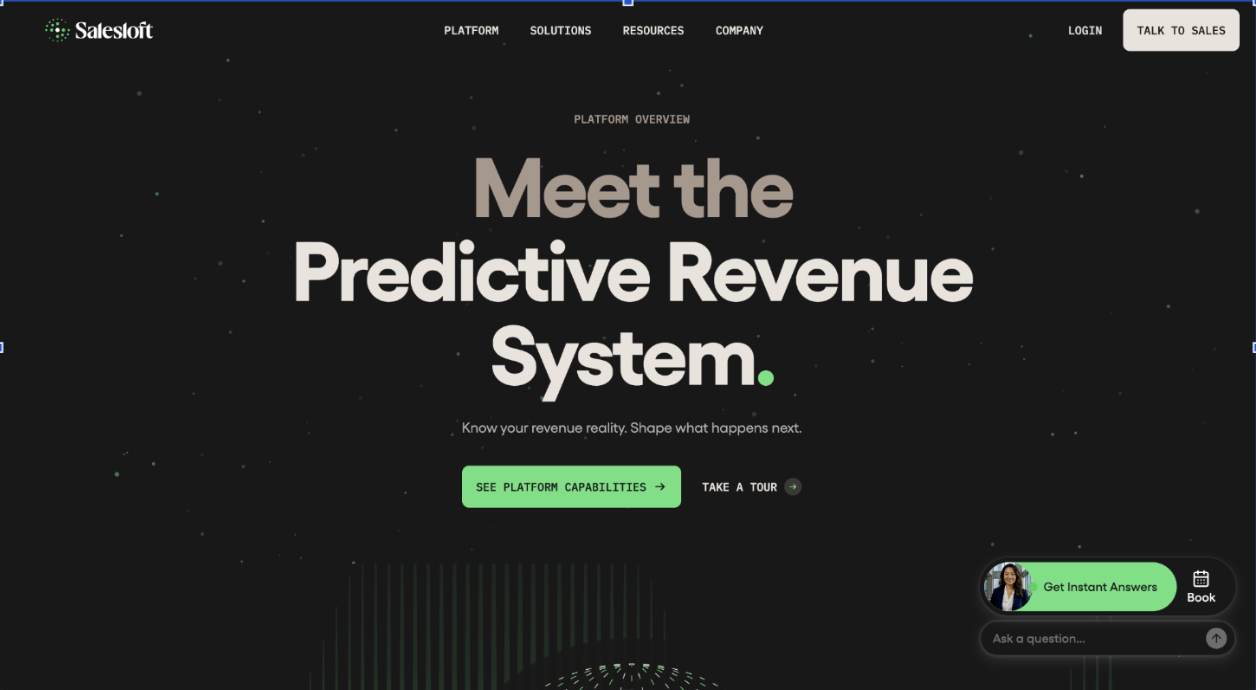
An April 2026 release connected Clari's forecasting and pipeline insights to Salesloft's execution layer and launched an MCP server that lets tools such as Claude, ChatGPT, Microsoft Copilot, Gemini and Salesforce Agentforce work on live Salesloft data. Call analysis comes through Clari Copilot, formerly Wingman, so conversation intelligence arrives inside the same platform instead of as a separate purchase. For a RevOps lead, the forecast call becomes a place where the AI view and the rep's call sit side by side and the gap sets the agenda.
Where it wins
- The most mature roll-up forecasting and inspection workflow in this list.
- One vendor for forecasting, call analysis and engagement.
- An open data layer, so pipeline and deal activity reach the AI tools your team already uses.
Where it falls short
- The products are still being unified, so expect two product lines for now.
- Unified pricing has not been announced.
Best for: enterprise RevOps teams that need forecasting and engagement together. Pricing: not disclosed publicly; the pricing page directs to Talk to Sales.
3. Outreach: best for prospecting-led teams
Outreach moved to outreach.ai and describes itself as an agentic AI platform for revenue teams to forecast, coach, close deals and expand accounts. Its forecasting uses AI-assisted modeling that validates calls and compares outcomes, its AI agents inspect deals and flag what is at risk, and it says sellers close over 2 million opportunities a month on the platform.

The Spring 2026 release added Omni, a universal conversational agent, and Agent Studio for building and scheduling custom agents. On the conversation side it added AI Topics Explorer, which mines trends in products, competitors, pitches and objections across accounts, an Outcomes Report that links engagement and deal attributes to win rates, and Smart Kaia Coach, which auto-scores rep skills across meetings.
Where it wins
- Mature sequencing and outbound execution, with forecasting and call tools in the same platform.
- Agents that turn insight into follow-up actions inside the workflow.
- Per-user pricing with no platform fee, unlike Gong's two-part model.
Where it falls short
- Engagement is the core, so conversation analysis is one module and not the centre of the product.
- Packages carry AI credits, from 10,000 to 100,000 by tier, so heavy agent use needs a higher tier.
Best for: teams whose main motion is outbound. Pricing: not disclosed publicly. Outreach lists per-user pricing with no platform fees across four packages (Amplify Essentials, Core, Plus and Pro) and asks for a custom quote.
4. Aviso: best for forecast-first teams
Aviso calls itself an end-to-end AI revenue platform that combines agentic AI, forecasting, conversational intelligence and RevOps in one product. Its forecasting pitch is committing with clarity at your own cadence, and its conversation analysis aims to show what reps do on calls, how buyers respond and how each interaction affects deal win probability.
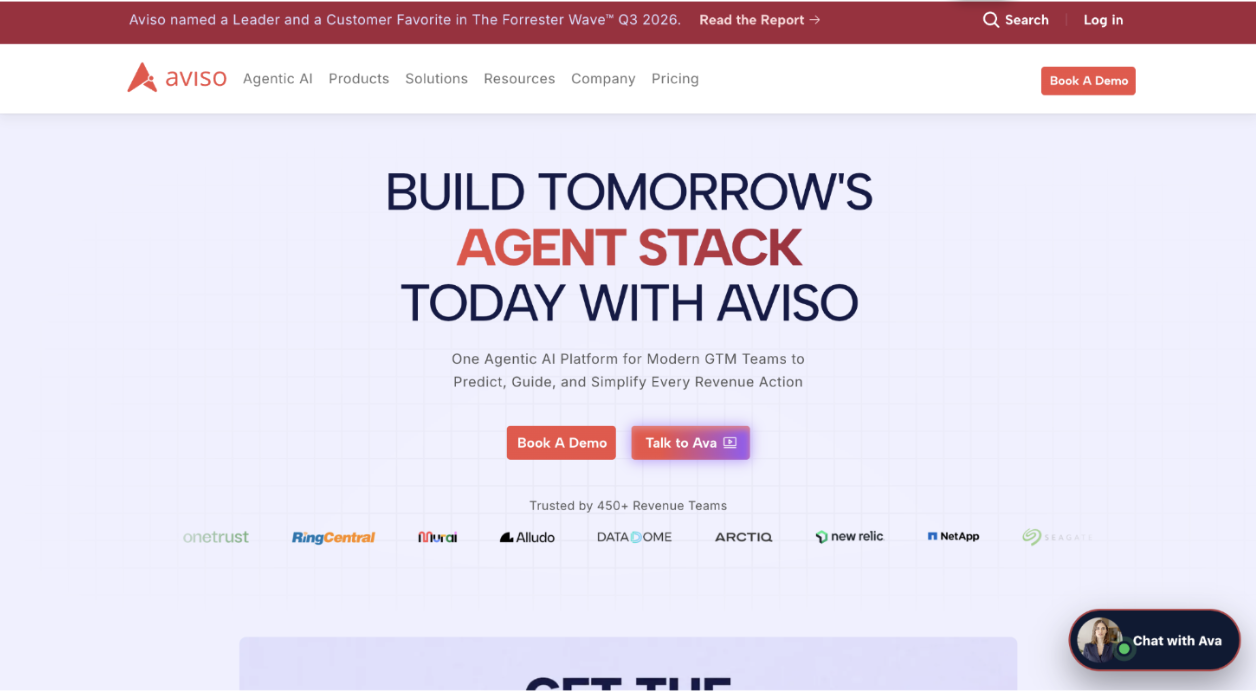
On coaching, Aviso says it connects enablement efforts to revenue outcomes for every rep and deal. Its marketing claims near-perfect forecast accuracy, and its case studies cite a 40% higher average win rate, so test those claims on your own data in a pilot. Its pitch to Gong switchers is that conversation analysis and forecasting sit in one product instead of two, with deal scores that reflect both.
Where it wins
- Forecasting depth, with conversation data feeding deal win probability.
- Coaching framed around revenue outcomes, not activity counts.
- An AI-first design built around agentic workflows.
Where it falls short
- It is narrower than a full execution platform, with no prospecting or CRM layer.
- Accuracy and win-rate figures are vendor-reported.
Best for: AI-first enterprise teams where the forecast is the main pain. Pricing: not disclosed publicly; Aviso's pricing page asks you to fill in a form for a tailored proposal.
5. Salesforce Agentforce Sales: best for Salesforce-native teams
Agentforce Sales is the new name for Sales Cloud. Salesforce's pipeline management agent reviews calls, meetings, emails and seller notes and turns them into suggested opportunity updates, in either suggestive or autonomous mode, with source context shown for each. Forecasting is included from the Pro Suite edition, advanced forecasting features are standard from Core upward, and Agentforce AI can be added to Core and above.
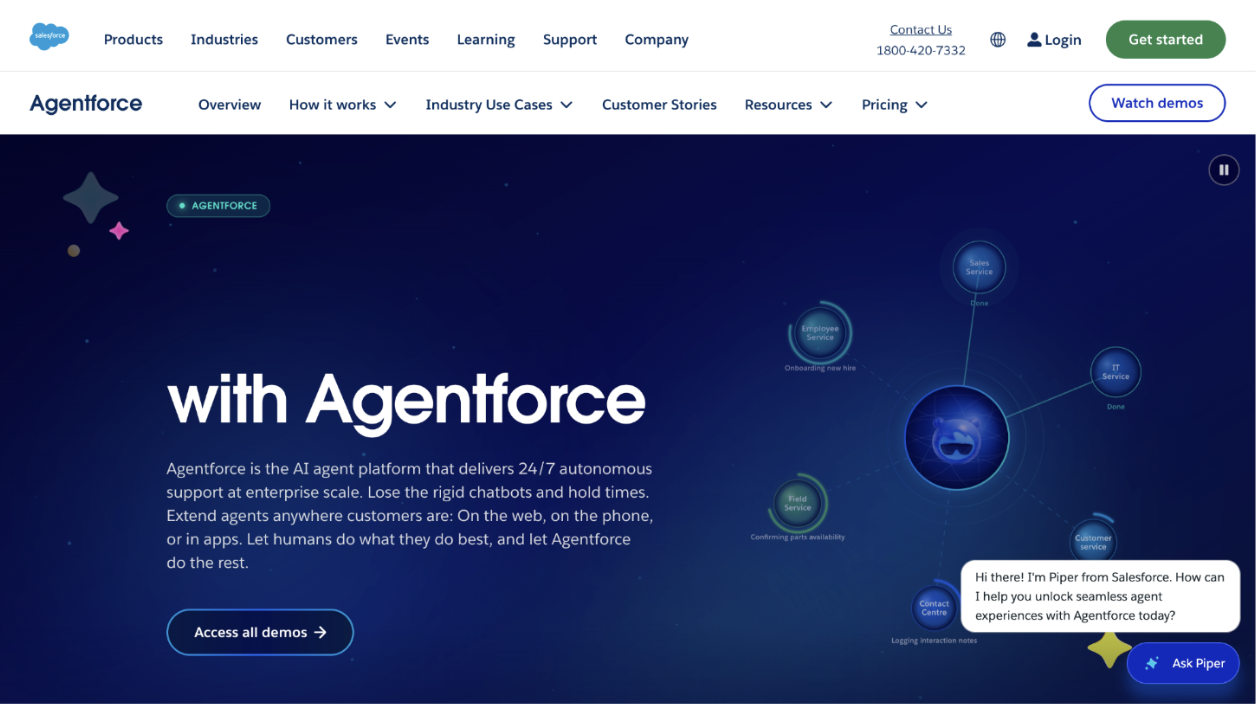
That matters for Gong switchers because the call insight lands directly in the system of record. Teams that already run Salesforce avoid a sync layer, an extra login and a second source of truth for deal data.
Where it wins
- The deepest CRM fit, with no sync layer between insight and record.
- Autonomous or reviewed updates, chosen by you.
- Forecasting and AI in one vendor, with editions that scale from Starter to Max.
Where it falls short
- Cost climbs with editions and AI add-ons.
- Call analysis is one capability among many, not a specialist product.
Best for: teams standardised on Salesforce. Pricing: Salesforce lists Starter Suite at $25, Pro Suite at $100, Core at $195, Advanced at $395 and Max at $550 per user per month, with the Agentforce for Sales add-on from $125.
Best for Conversation Intelligence Specialists
6. Chorus by ZoomInfo: best for teams already on ZoomInfo
ZoomInfo describes Chorus as conversation intelligence for sales. It offers call analysis with transcriptions and insights, a coaching and performance focus on identifying winning behaviors that raise team skills and cut new-hire ramp time, and deal intelligence that captures contacts and syncs communications for visibility into the relationships that drive revenue.

It also captures the voice of the customer, so leaders can see trends affecting their deals. Chorus is positioned as part of ZoomInfo's broader platform and is also available as a standalone product, with a separate sign-in for existing customers. For Gong switchers that means the call library and coaching toolkit exist without moving to a different category of tool.
Where it wins
- Call analysis and coaching in one product, with a long track record.
- Account data and call insight under one vendor for ZoomInfo customers.
- Market insight from customer conversations, not only rep performance.
Where it falls short
- Check which features need a ZoomInfo contract before you commit.
- Buying is demo-led, so you cannot size a deal from the website.
Best for: teams that already buy ZoomInfo. Pricing: not disclosed publicly; ZoomInfo directs buyers to request a demo.
7. Jiminny: best for mid-market teams on HubSpot
Jiminny describes itself as powerful revenue and sales intelligence that captures every email, phone and video call so leaders can see what is winning deals and coach what is not. Its AI extracts go-to-market insights, coaches reps and answers questions, and it logs notes and updates to the CRM automatically. It highlights its HubSpot integration.

Managers get coaching insights without paying for a recording seat, because Jiminny prices seats by role. A 14-day trial with full features and no credit card lets a team test it before signing, which matters because the minimum contract that follows is 12 months.
Where it wins
- Published seat prices with no platform fee.
- Seat types that match roles, so managers who only review calls pay less than the reps who record.
- Easy to trial and run for mid-market teams.
Where it falls short
- The minimum contract is 12 months.
- It has no forecasting suite or outbound execution.
Best for: mid-market teams that want call coaching without enterprise overhead. Pricing: Jiminny's FAQ lists recording seats from $83 a month, insights seats from $42 and listener seats at $0, with a one-time setup fee instead of a platform fee.
8. Revenue.io: best for a dialer plus call analysis
Revenue.io calls itself the revenue platform for better decisions, coaching, forecasting, conversations and execution. It combines sales engagement, dialing, conversation intelligence, real-time guidance, coaching and AI, and it is built for Salesforce teams, using Salesforce context to support routing, engagement and guidance.

Its Moments feature surfaces relevant guidance while a conversation is still happening, and it says it uses conversation evidence to focus coaching. Plans are named Activate, Engage and Orchestrate. Teams that live in Salesforce can keep call guidance, dialing and routing inside the tool reps already open all day.
Where it wins
- Calling, call analysis and guidance in one Salesforce-native tool.
- Real-time guidance during the conversation.
- Plans that map to jobs, from activation through orchestration.
Where it falls short
- It assumes Salesforce is your system of record.
- Pricing is quoted on a demo call.
Best for: Salesforce teams that run high call volume. Pricing: not disclosed publicly; seat-based and scoped to your team and plan, with a custom quote on a demo call.
Best for Affordable Call Notes
9. Avoma: best for SMB and cross-functional teams
Avoma describes itself as an all-in-one AI to automate note-taking, scheduling, coaching and forecasting. Its AI Meeting Assistant produces real-time, speaker-identified transcripts in 75+ languages, it automates call scoring and coaching for full coverage, and its revenue intelligence adds deal risk alerts and AI win-loss analysis.

It also includes a scheduler and lead router, and it integrates with Salesforce, HubSpot, Zoom, Microsoft Teams and 40+ other tools. That breadth suits teams where customer success and product want meeting notes too, and it lets a small team replace a notetaker, a scheduler and a call-scoring tool with one subscription.
Where it wins
- Transparent pricing, no platform fee, and free viewers and collaborators.
- Call scoring across every call, not a sample.
- Scheduling and routing in the same product.
Where it falls short
- Add-ons raise the real cost.
- It is a lighter fit for large enterprise rollouts.
Best for: small and mid-sized teams. Pricing: Avoma lists Startup at $19, Organization at $29 and Enterprise at $39 per recorder seat per month on annual billing, with Conversation Intelligence and Revenue Intelligence add-ons at $29 each and a 14-day trial with no credit card.
10. Sybill: best for AI recaps and a deal assistant
Sybill describes itself as an AI sales assistant that records calls, meetings, emails and Slack threads so it always knows the true state of every deal, and auto-updates CRM fields after every sales conversation. It says it learns from past wins and losses and recognizes patterns in live

Its free plan includes unlimited recordings and transcripts, and usage beyond that runs on weekly AI credits that rise by tier. The Business plan adds CRM autofill and a deal workspace, and Enterprise adds single sign-on and data migration support, which matters if you are moving off another tool and need your history to come with you.
Where it wins
- Low admin for reps, with CRM fields updated after each conversation.
- Public tiers and a free plan.
- Migration support on Enterprise.
Where it falls short
- It is lighter on structured coaching.
- Weekly credits can cap heavy use on lower tiers.
Best for: small teams that want recaps and CRM updates. Pricing: Sybill lists a free plan, Pro at $30 and Business at $90 per user per month, with Enterprise by quote.
11. Fireflies.ai: best for budget meeting notes
Fireflies calls itself the #1 AI assistant for meetings: it transcribes, summarizes, searches and analyzes team conversations, claims 95% transcription accuracy and supports 100+ languages. Its conversation analytics cover talk time, sentiment and topic trackers, and it offers real-time suggestions and answers during meetings.
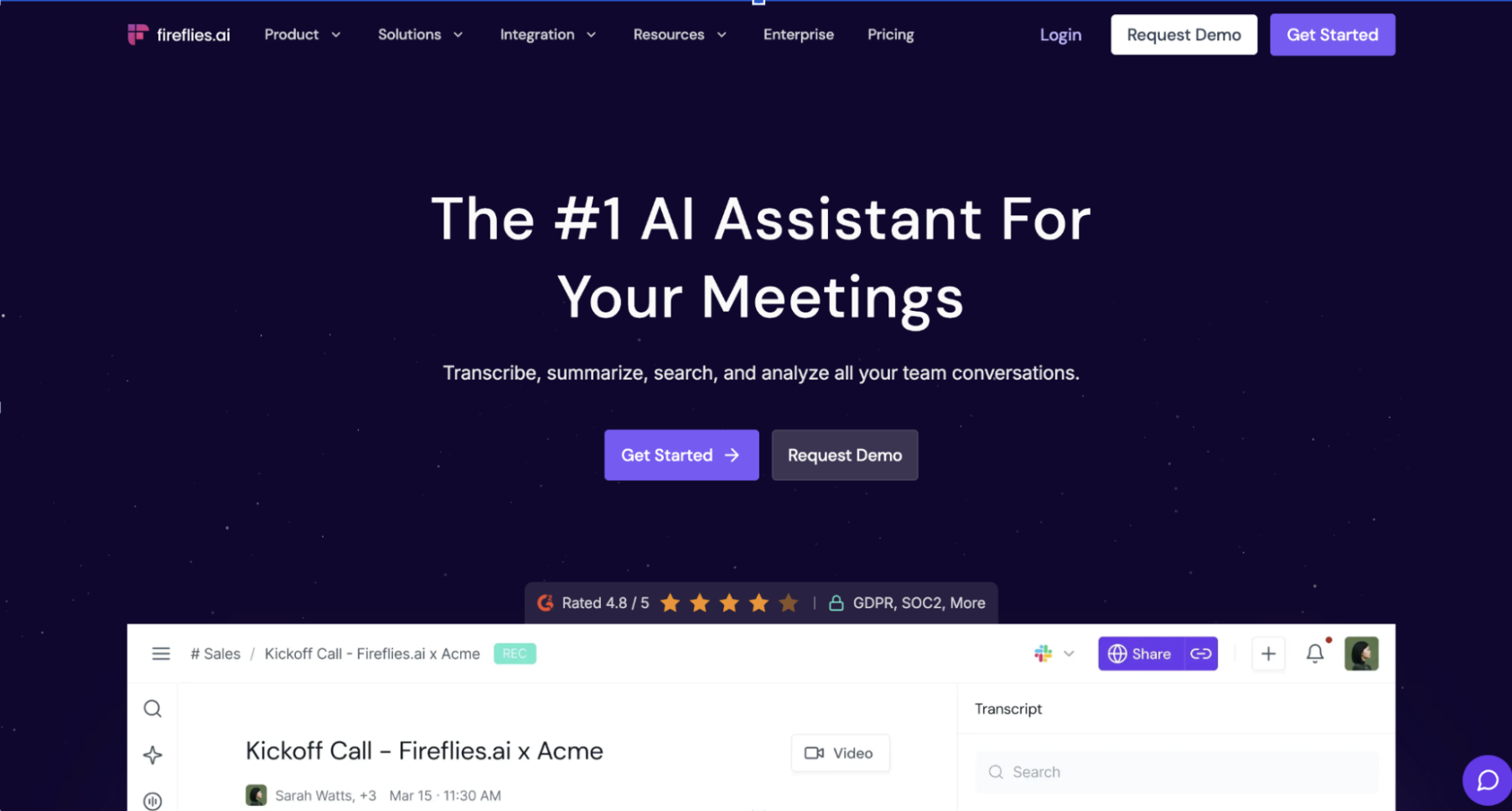
It works with 200+ tools across CRM, project management and Slack, and it reports SOC 2 Type II, GDPR and HIPAA compliance, with zero data retention and private storage options, which helps in regulated teams. CRM sync covers Salesforce and HubSpot.
Where it wins
- The lowest cost on this list, with a free plan.
- Broad language and integration coverage.
- Security certifications that suit regulated teams.
Where it falls short
- It focuses on notes, not coaching workflows.
- It has no deal-level forecasting or execution.
Best for: teams that need searchable transcripts on a budget. Pricing: Fireflies lists a free plan, Pro at $10, Business at $19 and Enterprise at $39 per seat per month on annual billing.
When to Stay on Gong
Gong is the benchmark for conversation analytics, and four situations favour staying:
- You coach weekly from recorded calls. Gong's coaching tools include AI scorecards that pinpoint skill gaps and flag coachable moments from real conversations.
- Your call library is a working asset. Libraries of top-performing calls feed onboarding, and recording history is the hardest thing to migrate.
- You need the deepest conversation analytics available. Even competitor Outdoo says Gong defined conversation intelligence.
If cost is the only issue, renegotiate before you leave: shorten seat counts to active users, drop unused add-ons and ask for multi-year pricing without a multi-year lock. Leave if you pay for call analysis but need execution, forecasting or a lower platform fee.
How to Test an Alternative Before You Commit
Run these five tests during a trial or pilot:
- Summary accuracy. Run 20 real calls through the tool and compare its summaries and action items with your managers' notes.
- CRM write-back. Check a month of field updates for errors and duplicates.
- Forecast variance. Compare its deal scores or forecast with Gong's on the same pipeline.
- Coaching use. Have two managers coach from the tool for two weeks and report what they changed.
- Total cost. Model year one including platform fees, add-ons, services and any metered credits, then model year three.
How to Switch From Gong
- Scope the export first. Gong's built-in call data download is a CSV of metadata and analytics, so ask in writing what a contract-end export of recordings and transcripts includes.
- Time it to renewal. Multi-year terms are common, so start six months before the end date and ask for a shorter renewal if you need runway.
- Run in parallel. Pilot the new tool with one team while Gong stays live, and agree the success measures first, such as call coverage, coaching completion and forecast variance.
- Rebuild trackers and scorecards. They rarely transfer, so list the ones managers use weekly and recreate those first.
- Check CRM field mapping so history and ownership are not lost.
- Reset the coaching rhythm. Tell managers which review meetings change, because the tool matters less than the habit.
Which Gong Alternative Should You Choose?
Match the choice to the job you need done. Stay on Gong if you coach weekly from recorded calls and rely on its library. Choose Clari + Salesloft or Aviso if forecasting is the pain, Outreach if outbound drives your motion, and Avoma, Sybill or Fireflies if you mostly need affordable call notes. Choose Kris@Work if you want one platform that takes a deal from prospecting to closed won and keeps the CRM current without manual entry. Whatever you shortlist, run the five tests above on one team before you sign.
To see how deal execution works on your own pipeline, start a free Kris@Work trial. No credit card is required.
Frequently Asked Questions
What is the best alternative to Gong?
It depends on the job. Kris@Work suits deal execution, Clari + Salesloft suit enterprise forecasting, and Avoma, Sybill or Fireflies suit affordable call notes.
Is there a cheaper alternative to Gong?
Yes. Avoma lists public pricing from $19 per seat per month with no platform fee, Sybill and Fireflies have free plans, and Outreach and Jiminny also avoid a platform fee.
How much does Gong cost per user?
Estimates run $1,300 to $1,600 per user per year on Foundations, plus a platform fee. Gong does not disclose prices publicly.
Who are Gong's main competitors?
Clari + Salesloft, Outreach, Aviso, Chorus by ZoomInfo, Jiminny, Revenue.io and Avoma lead the conversation and revenue intelligence field. Kris@Work competes on deal execution.
Is Gong worth the price?
It is when you coach weekly from recorded calls and use its forecasting. If you mostly want call summaries or a CRM that updates itself, you may be paying for modules you do not use.
Does Gong replace Salesforce?
No. Gong sits on top of your CRM and syncs call data with it, so you still need a system of record.
Can I export my call recordings if I leave Gong?
Partly. Gong's call data download exports a CSV of call metadata and analytics, and Gong community answers point to its API for bulk recordings. Ask Gong in writing what you can export.
Related Blog Posts

11 Best Zoho CRM Alternatives (2026)
17 September 2026
What Is CRM Automation? A Complete Guide (2026)
12 October 2026