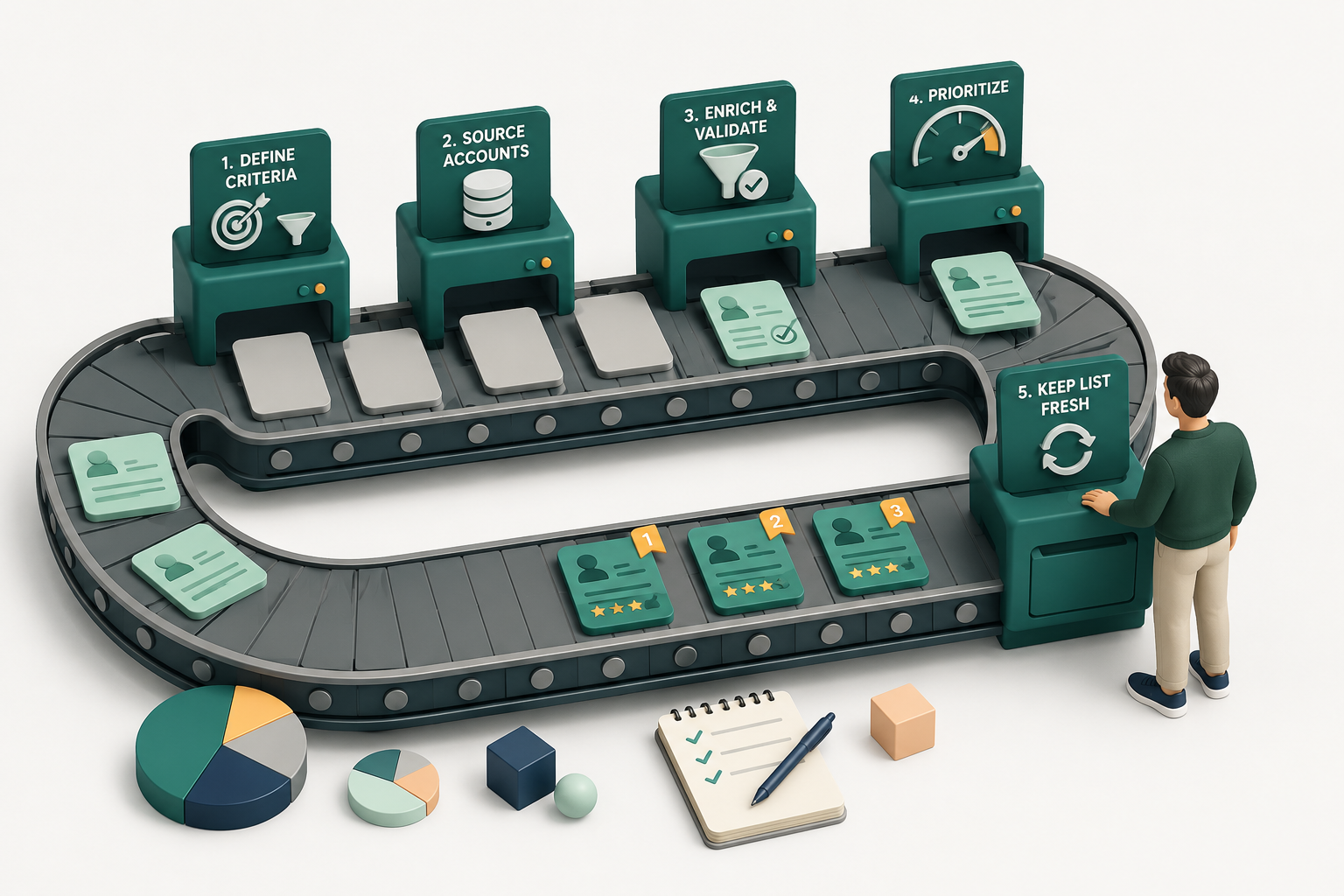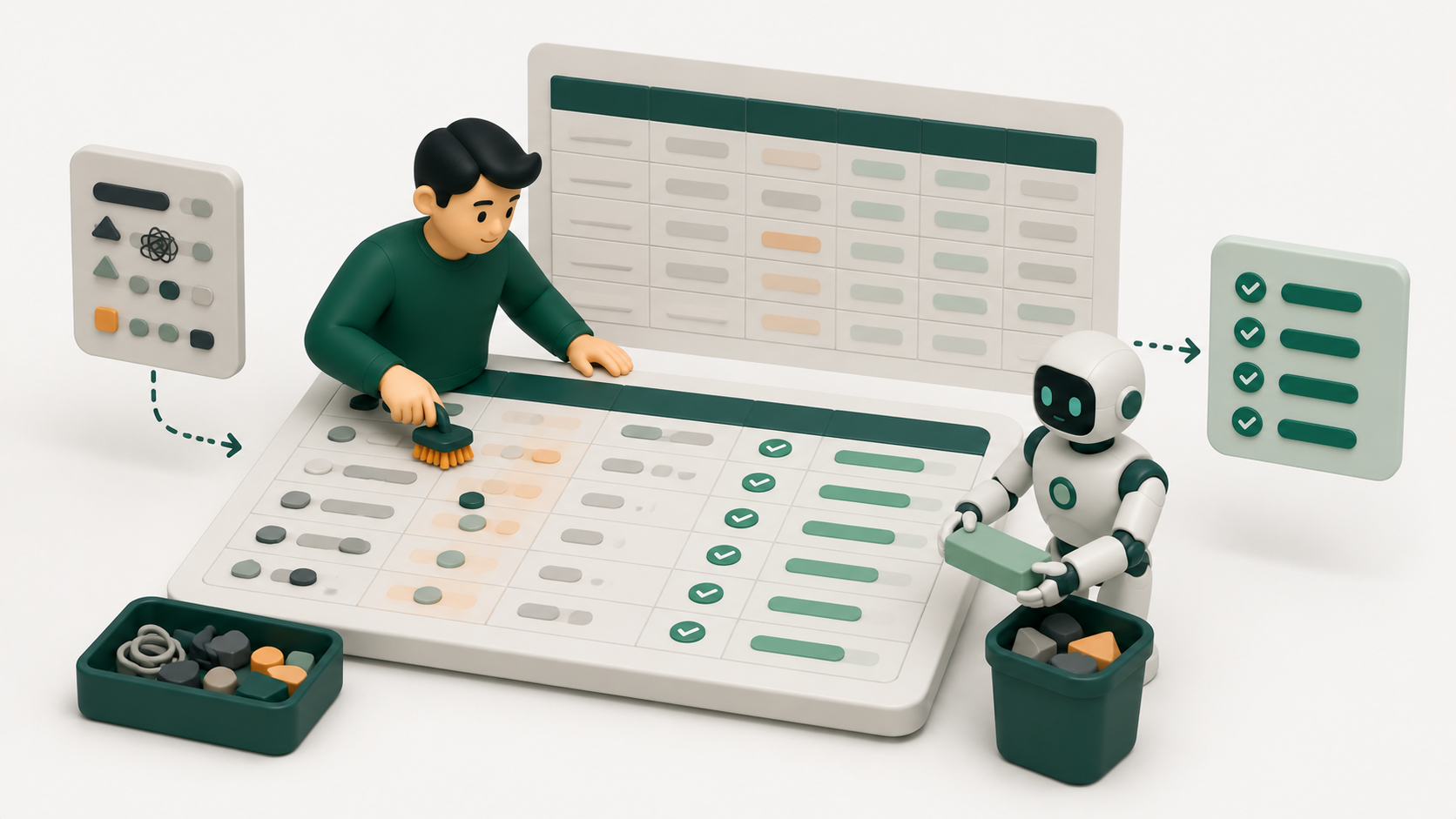

Most revenue teams searching for an AI-native GTM platform already have plenty of software. The problem is that reps still spend hours researching accounts, switching between tools, interpreting signals, updating systems, and deciding what to do next.
AI-native GTM platforms promise a different model. Depending on the product, they can research prospects, identify buying signals, prioritise accounts, personalise outreach, automate workflows, or execute parts of the sales process through AI agents.
This guide compares 13 AI-native and AI-powered GTM platforms, including Kris@Work, Artisan, Unify GTM, Monaco, Lightfield, Reevo, 11x.ai, Aurasell, Apollo.io, Gong, Clari, Sybill, and Salesloft, based on what each does best, where it falls short, and which teams should consider it.
TL;DR
- AI-native GTM platforms use AI to automate prospecting, research, outreach, forecasting, and sales execution.
- The 13 platforms covered include Kris@Work, Artisan, Unify GTM, Monaco, Lightfield, Reevo, 11x.ai, Aurasell, Apollo.io, Gong, Clari, Sybill, and Salesloft.
- The best choice depends on your biggest GTM bottleneck, from prospecting and buyer signals to CRM, meeting intelligence, and forecasting.
- The real value of an AI-native GTM platform lies in how effectively it turns data into intelligence and intelligence into action.
- Choose your platform based on the bottleneck you need to fix first, whether that is prospecting, buyer signals, autonomous outreach, CRM management, meeting intelligence, or revenue forecasting.
What is an AI-native GTM platform?
An AI-native GTM platform is a go-to-market platform built around artificial intelligence as a core part of how revenue work gets done, rather than adding AI features to an existing sales or marketing tool.
Depending on the platform, AI can research prospects, detect buying signals, prioritise accounts, recommend next actions, personalise outreach, automate workflows, or autonomously execute parts of the sales process.
There are broadly three levels of AI in GTM software:
| Type | How AI is used | Example workflow |
|---|---|---|
| Traditional GTM tool with AI features | AI assists with specific tasks | Write an email or summarise a call |
| AI copilot | AI helps reps analyse information and make decisions | Research an account or recommend a next step |
| AI-native GTM platform | AI is embedded across intelligence and execution | Detect a signal, prioritise an account, research the buyer, and prepare or execute an action |
Kris@Work, Artisan, Unify GTM, Monaco, Lightfield, Reevo, 11x.ai, and Aurasell belong more clearly to the new generation of platforms designed with AI at the centre of the product.
Apollo.io, Gong, Clari, Sybill, and Salesloft are better understood as AI-powered or AI-enabled GTM platforms. They have established workflows in areas such as prospecting, sales engagement, conversation intelligence, forecasting, and meeting intelligence, with AI increasingly embedded into those experiences.
That distinction does not make one group inherently better. It simply helps buyers understand what they are actually comparing.
The 13 best AI-native GTM platforms at a glance
Here is a quick comparison of the platforms covered in this guide.
| Platform | Best for | Core strength | AI model |
|---|---|---|---|
| Kris@Work | AI-native prospecting and qualification | Real-time intelligence, prioritisation, research, and personalised outreach | AI-native |
| Artisan | Automated BDR workflows | AI-led prospecting and outbound execution | AI-native |
| Unify GTM | Signal-based outbound | Intent signals and automated plays | AI-native |
| Monaco | Multi-agent GTM execution | AI agents across GTM workflows | AI-native |
| Lightfield | AI-native CRM workflows | AI-first customer and sales data management | AI-native |
| Reevo | Full-funnel AI-powered GTM | AI execution across revenue workflows | AI-native |
| 11x.ai | Autonomous AI digital workers | AI agents for sales development | AI-native |
| Aurasell | AI-native sales execution | AI-powered selling workflows | AI-native |
| Apollo.io | Sales intelligence at scale | B2B data, prospecting, and engagement | AI-enabled |
| Gong | Conversation and revenue intelligence | Sales conversations and deal insights | AI-enabled |
| Clari | Revenue forecasting | Pipeline visibility and forecasting | AI-enabled |
| Sybill | Meeting intelligence | AI summaries and CRM automation | AI-powered |
| Salesloft | Sales engagement | Multichannel sales execution | AI-enabled |
How we selected the best AI-native GTM platforms
We have evaluated the platforms based on the following six criteria:
- How central AI is to the product: Is AI fundamental to how the platform operates, or is it an additional feature within an established workflow?
- Depth of GTM workflows supported: Does the platform solve one specialised task or connect multiple parts of the revenue workflow?
- Ability to reduce manual work: Can it eliminate repetitive research, data entry, prioritisation, follow-ups, or outreach tasks?
- Use of signals and context: Can the platform act on buyer, account, conversation, pipeline, or intent signals?
- Level of execution: Does the platform only surface information, recommend an action, prepare the work, or execute it autonomously?
- Best-fit use case: Which teams get the most value from the product, and when is a competitor likely to be a better fit?
The platforms on this list solve very different problems. Gong should not be judged by the same criteria as an autonomous AI SDR.
Clari should not be evaluated as if it were a prospecting platform. Apollo.io serves a different need from an AI-native CRM like Lightfield. The goal is to make those differences clear.
1. Kris@Work: Best for AI-native prospecting and qualification
Kris@Work is an AI-native GTM execution engine built to reduce fragmentation across the prospecting workflow.
Its current in-market product, Kris Capture, focuses on the journey from prospecting to qualification. Rather than asking reps to move between separate tools for account research, prioritisation, signals, and outreach, Kris brings these workflows into one intelligent window.
The core difference is how intelligence reaches the rep.Traditional sales tools usually wait for a rep to search, filter, open a dashboard, or ask a question. Kris is designed around proactive, real-time intelligence. It can surface what matters, explain why it matters, and recommend a Next-Best-Action.
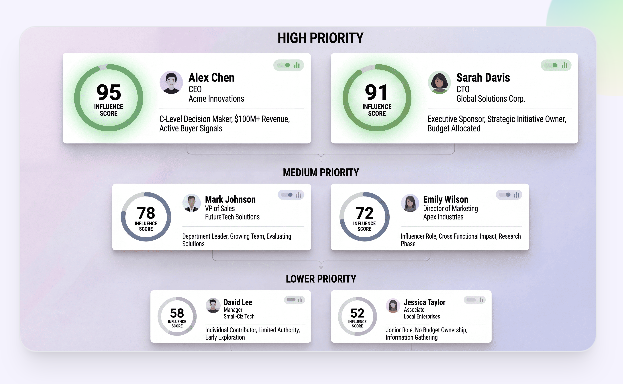
For an SDR, that could mean opening a ranked worklist of high-priority contacts instead of staring at hundreds of accounts and deciding where to start. Each contact can come with the reason behind its grade, relevant context, and a recommended action. Research and personalised drafts are prepared before the rep starts switching between tabs.
Kris@Work also supports warm introductions through mutual connections, uncapped AI personalisation, and hyper-personalised omnichannel outreach. Its multi-agentic architecture is designed to execute work rather than simply surface more information for the rep to process.
The underlying problem is straightforward. Sales teams often have plenty of data but little help deciding which accounts deserve attention right now. The rep becomes the integration layer between data providers, LinkedIn, intent tools, research tabs, sequencing platforms, and the CRM. Kris@Work tries to remove that burden by connecting intelligence directly to action.
Where Kris@Work stands out
Kris is particularly relevant for revenue teams dealing with tool fragmentation and heavy manual research.
It is designed for teams that want prospect prioritisation, research, proactive intelligence, Next-Best-Actions, warm introductions, and personalised outreach to work together rather than as separate steps.
Who should consider Kris@Work?
Kris@Work is a good fit for SDRs, AEs, and sales leaders who want to:
- Spend less time researching prospects across multiple tools
- Prioritise accounts and contacts based on fit and signals
- Receive proactive intelligence rather than manually hunting for it
- Get recommended next actions
- Find warm paths into target accounts through mutual connections
- Personalise outreach at scale
- Execute omnichannel prospecting from a more unified workflow
What to consider
Teams specifically looking for forecasting, conversation intelligence, churn prediction, or expansion management should evaluate platforms built for those use cases today.
For prospecting and qualification, Kris@Work offers a distinct approach: one intelligent window designed to turn account intelligence into the next action a rep should take.
2. Artisan: Best for automated BDR workflows

Its AI sales agent, Ava, is designed to automate parts of outbound prospecting, including lead discovery, research, personalisation, and outreach. Rather than giving a human SDR a collection of individual AI features, Artisan puts the AI worker at the centre of the workflow.
The appeal is straightforward. A large part of sales development involves repetitive work: finding prospects, gathering context, preparing messages, sending outreach, and managing follow-ups. Artisan aims to automate more of that work within one platform.
Where Artisan stands out
Artisan has built a clear identity around autonomous outbound execution. It is particularly relevant for companies looking to experiment with the AI BDR model rather than simply make existing human reps more productive.
Who should consider Artisan?
Artisan may be a fit for:
- Sales teams looking to automate outbound prospecting
- Companies evaluating AI BDRs
- Lean teams trying to expand outbound capacity
- Organizations that want prospect research and outreach within one system
What to consider
Automation can increase activity quickly. That does not automatically mean it creates better conversations.
Teams should carefully evaluate targeting accuracy, message quality, brand control, deliverability, and the level of human oversight required. The real test is not how much outreach an AI BDR can send. It is whether prospects find that outreach relevant enough to respond.
3. Unify GTM: Best for signal-based outbound

Unify GTM focuses on turning buyer signals into outbound action.
Instead of asking sales teams to work through static prospect lists, Unify helps identify accounts showing relevant intent and trigger plays based on those signals.
The value is timing. A highly personalised email is still less useful if it arrives months after the buyer showed interest. Signal-based outbound tries to shorten the distance between a meaningful event and the action that follows.
That could mean responding when a target account visits a high-intent webpage, when relevant account activity appears, or when another configured signal suggests there is a reason to reach out.
Where Unify GTM stands out
Unify is particularly strong for teams that already believe in signal-based selling and want to operationalize it at scale.
Instead of collecting intent data in a dashboard and expecting reps to check it manually, the platform connects signals with automated plays.
Who should consider Unify GTM?
Unify is worth considering for:
- Outbound teams with a signal-based sales strategy
- Companies with meaningful website traffic
- Teams looking to automate trigger-based outbound
- Revenue organizations moving beyond static prospect lists
What to consider
A signal is only valuable when it meaningfully improves the timing or relevance of an action. Teams should evaluate not just how many signals they can collect, but which signals actually correlate with buying intent. More signals can create more noise if there is no clear way to prioritise them.
4. Monaco: Best for multi-agent GTM execution

Monaco represents a newer approach to GTM software built around multiple AI agents.
Instead of treating AI as a single assistant that answers questions or writes content, multi-agent systems divide work between specialised agents. One might handle research, another data collection, another messaging, and another execution.
The idea is to move beyond task-level assistance toward coordinated AI execution. For revenue teams, this could reduce the amount of manual work required to move from identifying an opportunity to researching it and acting on it.
Where Monaco stands out
Monaco is most interesting for teams exploring the potential of coordinated AI agents across GTM workflows.
Its value proposition is less about one isolated AI feature and more about agents working together to complete larger pieces of work.
Who should consider Monaco?
Monaco may suit:
- Revenue teams experimenting with agentic GTM systems
- Companies looking to automate multi-step workflows
- Lean GTM teams seeking greater execution capacity
- Organizations comfortable adopting newer AI-native platforms
What to consider
Buyers should evaluate how much work agents genuinely execute, how reliable that execution is, where human approval is required, and how easily the system fits into existing GTM processes. The number of agents matters less than the quality of the outcome they produce.
Visual cue: A multi-agent workflow showing specialised AI agents for research, account intelligence, messaging, and execution collaborating around a single prospect.
5. Lightfield: Best for AI-native CRM workflows

Lightfield approaches the CRM problem from an AI-native perspective.
Traditional CRMs were built primarily as systems of record. Reps enter information, update fields, manage opportunities, and leave behind a history of what happened.
The AI-native CRM model asks a different question: how much of that work should the system handle itself?
Lightfield is part of a newer category trying to make customer and sales data more useful without relying on the same level of manual administration.
Where Lightfield stands out
Lightfield is most relevant to teams questioning whether the traditional CRM experience is still the right interface for modern sales work.
Its AI-native positioning makes it particularly interesting for companies that want intelligence and automation embedded directly into customer data workflows.
Who should consider Lightfield?
Lightfield may be relevant for:
- Startups evaluating modern CRM alternatives
- Teams frustrated by manual CRM administration
- Companies looking for an AI-native system of record
- Revenue teams open to replacing legacy workflows
What to consider
Changing a CRM is a fundamentally different decision from adding a prospecting or meeting intelligence tool.
The CRM often sits at the centre of a company's revenue operations, integrations, reporting, and customer data. Buyers should evaluate migration requirements, ecosystem maturity, integrations, and long-term scalability alongside AI capabilities.
6. Reevo: Best for AI-powered full-funnel GTM execution

Reevo takes a broader approach to AI-powered GTM.
Rather than focusing only on one narrow task such as email generation or meeting summaries, it aims to support execution across a wider part of the revenue workflow.
That makes Reevo relevant to teams looking beyond isolated AI point solutions. The broader promise of full-funnel AI is to reduce the handoffs and context loss that happen when different stages of the customer journey live in separate tools.
Where Reevo stands out
Reevo is differentiated by the breadth of its GTM ambition. For teams exploring how AI can support multiple parts of the revenue process rather than one isolated workflow, that broader approach may be attractive.
Who should consider Reevo?
Reevo may suit:
- Revenue teams seeking broader AI-powered GTM execution
- Companies looking to reduce workflow fragmentation
- GTM leaders exploring alternatives to multiple point solutions
- Teams comfortable adopting newer AI-native platforms
What to consider
Breadth should always be tested against depth. A platform that covers many workflows is not automatically better than specialised tools that solve individual problems deeply.
Buyers should evaluate which capabilities are mature today, which are still developing, and whether the platform is genuinely strong in the workflows that matter most to their team.
7. 11x.ai: Best for autonomous AI digital workers

11x.ai is one of the most visible companies in the AI digital worker category.
Its model goes beyond assisting human sellers with individual tasks. The goal is to create autonomous AI workers capable of handling larger portions of sales development workflows.
For revenue leaders, the proposition is about capacity. AI agents can perform repetitive prospecting work without the same time constraints as human SDRs.
Where 11x.ai stands out
11x is designed for companies specifically exploring autonomous sales execution.
A traditional copilot helps a rep work faster. An AI digital worker attempts to perform parts of the role itself.
Who should consider 11x.ai?
11x may suit:
- Companies exploring autonomous AI sales agents
- Teams with high outbound volumes
- Revenue leaders looking to increase prospecting capacity
- Organizations comfortable giving AI more autonomy
What to consider
Autonomous outbound raises important questions about brand control, message quality, deliverability, targeting, and the prospect experience.
The right question is not simply whether an AI agent can execute outreach at scale. It is whether the quality of that execution meets the standard your company wants associated with its brand.
Visual cue: A spectrum from "Human-led" to "AI-assisted" to "AI-recommended" to "AI-autonomous", showing how different GTM operating models give AI progressively more responsibility.
8. Aurasell: Best for AI-native sales execution

Aurasell belongs to the new generation of sales platforms designed with AI as a foundational part of the selling experience.
Its broader goal is to use AI to reduce the manual work surrounding sales execution and help reps operate with more context and automation.
This positions Aurasell differently from legacy sales platforms where AI has been added after the core workflow was already established.
Where Aurasell stands out
Aurasell is relevant for teams interested in an AI-native approach to sales execution rather than adding another AI point solution to an existing stack.
The focus is on making AI part of how sales work gets done.
Who should consider Aurasell?
Aurasell may be relevant for:
- Sales teams exploring AI-native sales platforms
- Companies looking to reduce repetitive rep work
- Revenue organizations seeking more automated workflows
- Teams open to replacing parts of an existing sales stack
What to consider
As with any newer AI-native platform, buyers should examine product maturity, integrations, workflow depth, implementation requirements, and how much of the existing sales stack the platform can realistically replace.
A broad AI-native vision is useful. What matters is what the product can execute reliably today.
9. Apollo.io: Best for sales intelligence and prospecting at scale

Apollo.io is one of the most established platforms on this list.
Its strength comes from combining a large B2B contact database with prospecting, enrichment, sequencing, engagement, and increasingly, AI-powered capabilities.
For many SMB and mid-market teams, Apollo can cover a significant part of the outbound workflow without requiring a collection of highly specialised tools.
Where Apollo.io stands out
Apollo's advantage is breadth and accessibility.
Teams can find contacts, build prospect lists, enrich data, run sequences, and manage outbound activity from one platform.
Its large user base and broad functionality also make it a more established choice than many newer AI-native competitors.
Who should consider Apollo.io?
Apollo is a strong option for:
- Startups and SMBs
- Mid-market sales teams
- Companies that need a large B2B contact database
- Teams wanting prospecting and engagement in one platform
What to consider
Apollo is better described as an established sales intelligence and engagement platform with AI capabilities than as a platform built entirely around an AI-native operating model.
Teams specifically seeking multi-agent execution, proactive intelligence, or deeply autonomous workflows should evaluate how Apollo's AI capabilities compare with newer platforms designed around those concepts from the beginning. That does not make Apollo weaker. It makes it a different type of choice.
10. Gong: Best for conversation and revenue intelligence

Gong built its reputation by turning sales conversations into structured intelligence.
Calls, meetings, emails, and other buyer interactions contain valuable information about deal health, objections, competitors, buyer sentiment, and rep performance. Historically, much of that information was trapped inside individual conversations.
Gong helps revenue teams capture and analyse those interactions. Its AI-powered capabilities can surface insights from sales conversations, help managers understand deal risks, and give teams greater visibility into what is actually happening across the pipeline.
Where Gong stands out
Gong is particularly strong in conversation intelligence and revenue insights. For organizations with large sales teams and significant call volumes, the ability to analyse customer interactions at scale can improve coaching and deal visibility.
Who should consider Gong?
Gong may be a strong fit for:
- Mid-market and enterprise sales teams
- Revenue leaders seeking better deal visibility
- Sales managers focused on coaching
- Organizations with significant sales conversation volume
What to consider
Gong solves a different problem from prospecting-first AI-native platforms.
If your main bottleneck is finding the right accounts, researching prospects, or executing outbound, Gong is not a direct replacement for a prospecting platform. Its strength begins once meaningful buyer interactions are already happening.
Visual cue: A sales conversation flowing into structured insights such as objections, competitor mentions, deal risks, next steps, and coaching opportunities.
11. Clari: Best for revenue forecasting and pipeline visibility
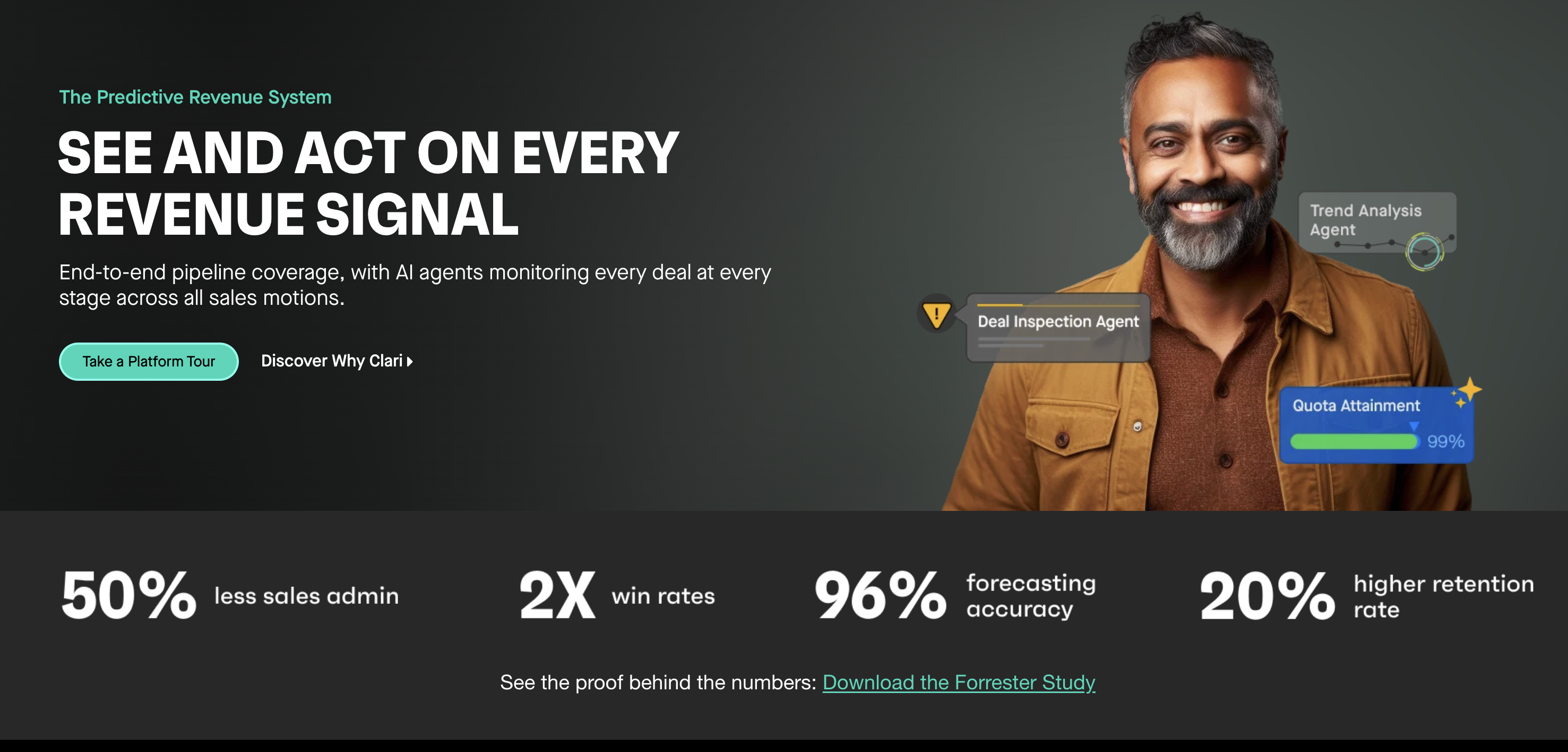
Clari focuses on revenue operations, forecasting, and pipeline visibility. For large revenue organizations, one of the biggest challenges is understanding what is actually likely to close, where deals are at risk, and whether the pipeline is sufficient to hit the number.
Clari uses data and AI-powered insights to help revenue teams improve visibility across those questions.
Where Clari stands out
Clari is built for revenue leaders who need a more systematic view of forecasting and pipeline health.
It is particularly relevant for complex organizations where forecasting depends on information spread across many reps, opportunities, systems, and management layers.
Who should consider Clari?
Clari may be suitable for:
- Enterprise revenue organizations
- CROs and revenue leaders
- RevOps teams
- Companies with complex forecasting requirements
- Organizations seeking greater pipeline visibility
What to consider
Clari is not primarily a prospecting or outbound execution platform. Teams should consider it when the central problem is forecasting, pipeline inspection, or revenue visibility rather than top-of-funnel prospecting.
This distinction matters because "AI for GTM" covers very different jobs. A forecasting platform and an AI SDR may both use AI, but they solve fundamentally different revenue problems.
12. Sybill: Best for AI-powered meeting intelligence

Sybill focuses on the work surrounding sales conversations. Sales reps spend significant time taking notes, updating CRM records, writing follow-ups, and trying to remember details from meetings. Meeting intelligence platforms use AI to automate more of that administrative work.
Sybill helps turn conversations into summaries, follow-up context, and structured sales information.
Where Sybill stands out
Sybill is particularly relevant for sellers who want to spend less time on post-meeting administration.
Instead of manually reviewing notes and updating systems after every call, AI can help capture the important context and prepare the next steps.
Who should consider Sybill?
Sybill may be a fit for:
- Account executives
- Customer-facing sales teams
- Companies with high meeting volumes
- Reps who spend significant time on notes and CRM updates
What to consider
Sybill is a specialized solution. It does not aim to replace prospecting platforms, outbound systems, or revenue forecasting tools. Its value is concentrated around meetings and the administrative work that follows them.
For teams whose biggest productivity drain happens after customer calls, that specialisation can be a strength.
13. Salesloft: Best for AI-enabled sales engagement

Salesloft is one of the established leaders in sales engagement.
The platform helps revenue teams manage prospecting cadences, emails, calls, tasks, and broader seller workflows. AI is increasingly part of that experience, helping teams work with more intelligence inside established sales engagement processes.
For larger sales organizations, Salesloft offers a mature platform with a broad set of capabilities and an established position in the revenue technology stack.
Where Salesloft stands out
Salesloft's strength is mature sales engagement infrastructure. It is built for teams that need structured, repeatable outbound workflows across many reps and managers.
Who should consider Salesloft?
Salesloft may suit:
- Mid-market and enterprise sales organizations
- Large SDR teams
- Companies with mature outbound processes
- Revenue teams that need established sales engagement capabilities
What to consider
Salesloft is not AI-native in the same sense as platforms built from the ground up around AI agents or multi-agent execution.
It is an established sales engagement platform that increasingly uses AI to improve existing workflows.
For buyers, the choice comes down to whether they want AI embedded within a mature sales engagement system or a newer operating model built around AI from the beginning.
Visual cue: A split illustration comparing two paths. Path one shows an established sales platform adding AI features to existing workflows. Path two shows an AI-native platform where intelligence and agents form the foundation of the workflow.
How to choose the right AI-native GTM platform
| Challenge | Consider | Why |
|---|---|---|
| Reps spend too much time researching prospects, prioritising accounts, and switching between tools | Kris@Work | Brings prospect prioritisation, proactive real-time intelligence, AI research, Next-Best-Actions, warm introductions, and personalised omnichannel outreach into one intelligent window |
| You want to automate repetitive BDR work | Artisan | Uses an AI BDR to automate lead discovery, prospect research, personalisation, and outbound execution |
| You want to act on buyer signals faster | Unify GTM | Connects intent signals with automated outbound plays so teams can act when relevant buying activity occurs |
| You want coordinated AI agents across GTM workflows | Monaco | Uses a multi-agent approach to execute multi-step GTM workflows |
| You want an AI-native alternative to a traditional CRM | Lightfield | Applies an AI-first approach to customer data and sales workflows |
| You want broader AI execution across the GTM funnel | Reevo | Focuses on using AI across multiple revenue workflows rather than one isolated task |
| You want autonomous AI workers for sales development | 11x.ai | Uses autonomous AI agents to execute parts of the outbound sales development process |
| You want an AI-native approach to sales execution | Aurasell | Uses AI to reduce repetitive sales work and automate parts of the seller workflow |
| You need B2B contact data and sales engagement in one platform | Apollo.io | Combines a large B2B prospect database with enrichment, sequencing, and sales engagement |
| You want to extract intelligence from sales conversations | Gong | Analyses buyer interactions to surface deal insights, risks, objections, and coaching opportunities |
| You need better forecasting and pipeline visibility | Clari | Focuses on revenue forecasting, pipeline inspection, and deal visibility |
| You want to reduce post-meeting admin | Sybill | Automates meeting summaries, follow-ups, and CRM updates |
| You need mature sales engagement infrastructure | Salesloft | Provides structured multichannel sales engagement with AI embedded into established workflows |
Choose an AI-native GTM platform based on your biggest bottleneck
The best AI-native GTM platform is the one that solves the most expensive bottleneck in your current revenue process.
If you want an autonomous AI BDR, Artisan or 11x.ai may fit the requirement. If your strategy revolves around buyer signals, Unify GTM deserves a closer look. If you want to rethink the CRM itself, Lightfield takes an AI-native approach.
For conversation intelligence, Gong is an established choice. Clari is built for forecasting and pipeline visibility. Sybill focuses on meeting intelligence, while Salesloft offers mature sales engagement infrastructure.
For revenue teams that want to connect prospect prioritisation, proactive real-time intelligence, AI-powered research, Next-Best-Actions, warm introductions, and personalised omnichannel outreach, Kris@Work offers a different model.
The larger shift is clear. GTM teams do not need more AI features scattered across more tools. They need better ways to turn data into intelligence and intelligence into action.
The platform that does that with the least friction is the one worth paying attention to.
FAQs about AI-native GTM platforms
1. What is the best AI-native GTM platform in 2026?
There is no single best platform for every GTM team. Kris@Work is built for AI-native prospecting and qualification with proactive intelligence, prioritisation, research, Next-Best-Actions, warm introductions, and personalised outreach.
Artisan and 11x.ai focus on AI sales agents. Unify GTM specialises in signal-based outbound. Lightfield takes an AI-native approach to CRM. The right choice depends on the revenue problem you need to solve.
2. What is an AI-native GTM platform?
An AI-native GTM platform is software designed around artificial intelligence as a core part of how go-to-market work gets done.
Depending on the platform, AI may research accounts, detect signals, prioritise prospects, recommend actions, personalise outreach, automate administrative work, analyse conversations, or autonomously execute parts of a sales workflow.
3. What is the difference between AI-native and AI-enabled GTM software?
AI-native platforms are designed around AI from the beginning. AI plays a foundational role in the product's architecture and workflow.
AI-enabled platforms typically have an established core product and add AI capabilities to improve existing workflows.
Both can be valuable. The distinction helps buyers understand whether AI is the foundation of the product or an enhancement to an existing system.
4. What is the best AI platform for sales prospecting?
It depends on the prospecting workflow. Kris@Work is relevant for teams seeking prioritisation, proactive real-time intelligence, research, Next-Best-Actions, warm introductions, and personalised omnichannel outreach. Artisan and 11x.ai focus more heavily on autonomous sales development. Apollo.io combines B2B data with prospecting and engagement at scale.
5. What is the difference between an AI SDR and an AI-native GTM platform?
An AI SDR is specifically designed to automate sales development work such as finding prospects, researching them, sending outreach, and following up.
An AI-native GTM platform is a broader category. It may focus on CRM, enrichment, prospecting, signals, prioritisation, research, sales execution, or multiple workflows together.
6. Which AI GTM platform is best for enterprise sales teams?
It depends on the workflow. Gong is a strong option for conversation intelligence and deal insights. Clari specialises in revenue forecasting and pipeline visibility. Salesloft provides mature sales engagement capabilities for larger teams.
For enterprise prospecting teams that want account prioritisation, real-time intelligence, AI research, Next-Best-Actions, and personalised outreach, Kris@Work is another option to evaluate.
7. Which AI GTM platform is best for startups?
Apollo.io may appeal to startups that need broad contact data and engagement capabilities. Lightfield is relevant for teams considering an AI-native CRM. Artisan and 11x.ai may suit companies experimenting with autonomous sales development.
The best option depends on budget, sales motion, internal GTM expertise, and how much autonomy you want to give AI.
8. How much do AI-native GTM platforms cost?
Pricing varies significantly. Some platforms offer self-serve plans, while enterprise-focused tools use custom pricing based on seats, usage, data consumption, credits, workflows, or AI agent activity.
Buyers should look beyond subscription price and calculate the total cost of the workflow. A cheaper tool that requires three additional products, extensive manual work, and constant integration maintenance may cost more in practice.
What should I look for when choosing an AI-native GTM platform?
Start with five questions:
- What specific GTM bottleneck does the platform solve?
- What intelligence does it surface that your team does not have today?
- What manual work does it actually remove?
- How much control do humans retain over execution?
- Does it replace existing tools or simply add another interface?
A strong AI-native platform should make the GTM workflow simpler, not give reps one more dashboard to check.