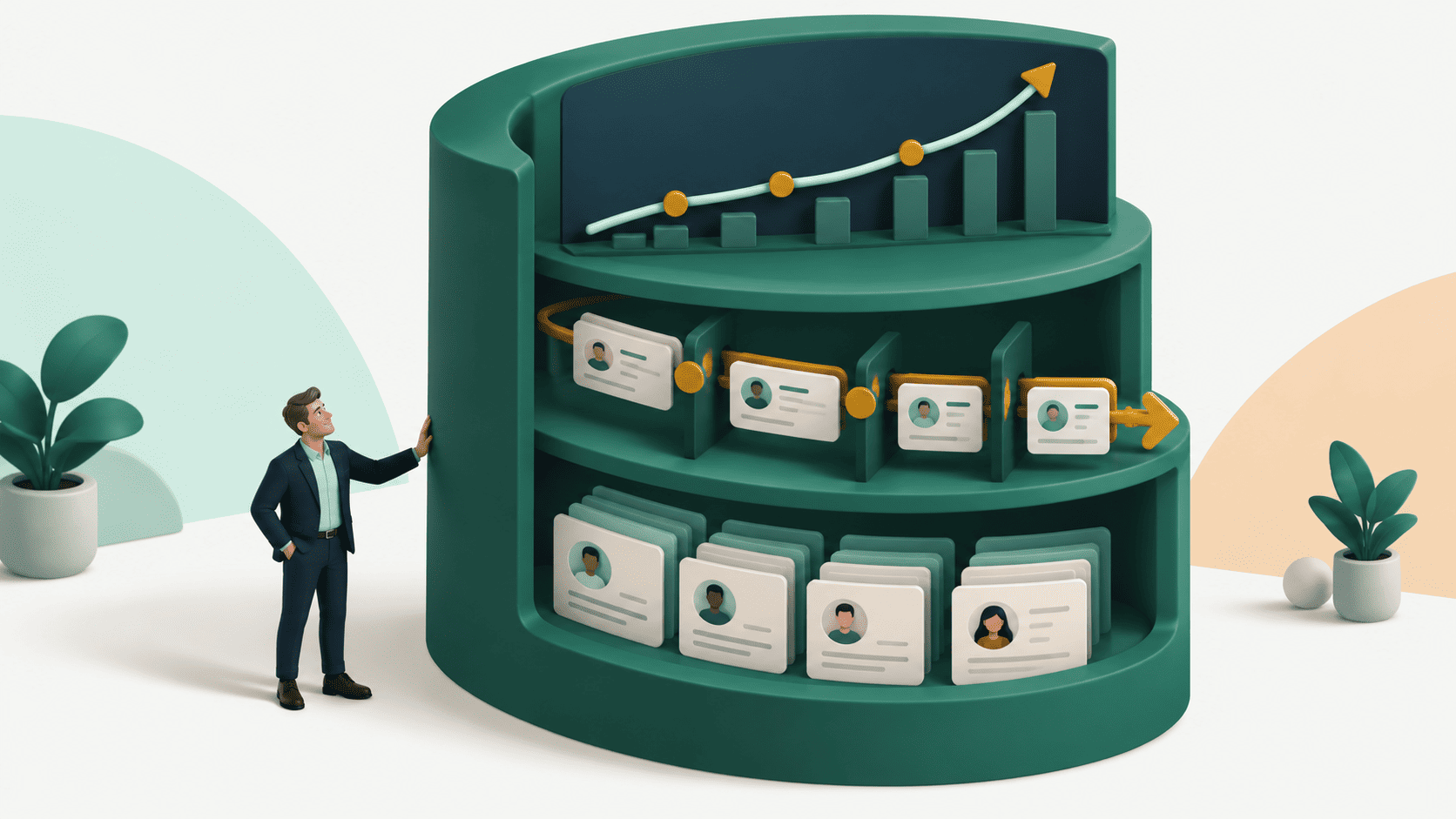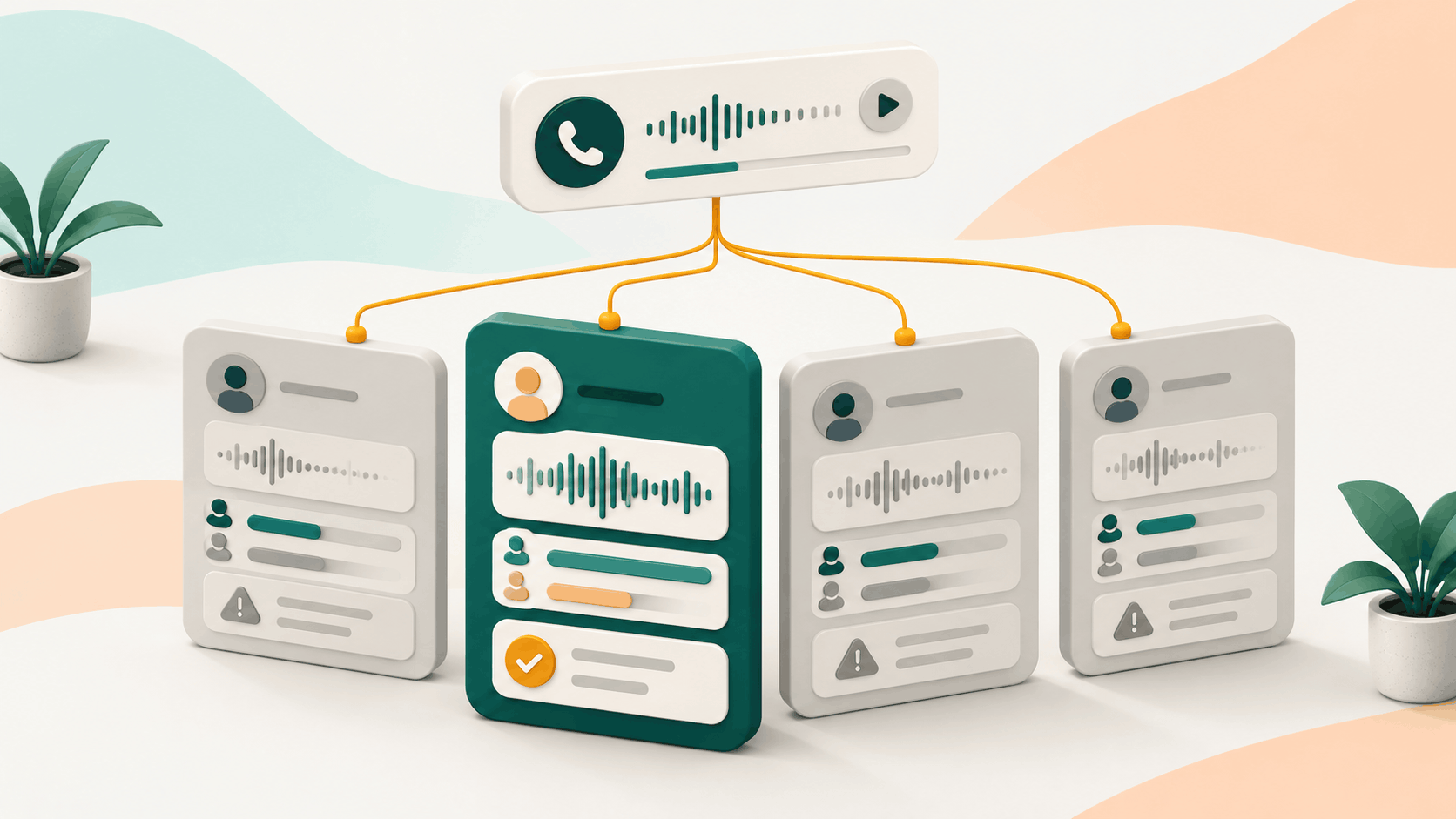

The B2B sales process is rarely a straight line from first contact to signed contract. Buyers need time to evaluate options, involve stakeholders, understand the business case, and resolve concerns before making a decision. For sales reps, that means knowing what to do at each stage, what information to gather, and when to move the conversation forward.
A repeatable sales process gives reps a clear way to guide buyers through these decisions without treating every opportunity as if it were the same.
7 Stages of the B2B Sales Process
Here are the seven stages of the B2B sales process, from finding the right prospects to handing off a closed-won deal:

1. Prospecting: Find the Right Accounts
Prospecting is the stage where sales reps identify potential customers who fit the company's ideal customer profile (ICP). This involves researching companies, finding relevant contacts, identifying business needs, and determining which accounts are worth pursuing. Effective prospecting focuses on fit and potential buying relevance, rather than building the largest possible contact list.
Start by defining your target accounts using criteria such as industry, company size, location, technology stack, and business challenges. Then identify the people likely to influence or make the buying decision. prioritize accounts using relevant signals, such as hiring activity, expansion, or a business change that creates a reason to engage. A focused list helps reps spend less time on poor-fit prospects and more time starting relevant conversations.
Kris Capture uses an ICP Match List to identify accounts that fit a team's target profile and supports prioritization so reps can focus on the accounts most worth pursuing. The objective is to begin the sales process with a clear reason to contact each prospect.
2. Qualification: Determine Whether the Opportunity Is Worth Pursuing
Qualification helps reps establish whether a prospect has a genuine problem to solve, a plausible reason to buy, and the ability to make a decision. A prospect who responds to outreach is not necessarily a qualified opportunity. They may lack budget, have no immediate need, or be unable to influence the purchasing decision.
During this stage, ask questions about the prospect's goals, current process, challenges, decision criteria, budget, timing, and stakeholders. The aim is to understand whether your solution fits and whether there is a realistic path to a purchase. Frameworks such as BANT (Budget, Authority, Need, and Timeline) and MEDDPICC can help reps organize what they learn, particularly in complex enterprise sales. Use them as guides for discovery, not rigid questionnaires that turn the conversation into an interrogation.
Kris Close supports qualification with one-click MEDDPICC and BANT insights drawn from buyer conversations and available deal evidence. This helps reps identify gaps in what they know and determine which questions to ask next. Qualification should lead to a clear decision: continue investing in the opportunity, nurture it until the timing improves, or disqualify it when the fit is not there.
3. Discovery: Understand the Buyer's Problem
Discovery is where reps move beyond basic qualification to understand the business problem, its impact, and what a successful outcome would look like. Even when a prospect fits the ICP and has a clear need, the rep must establish how the problem affects the organization and why solving it matters now.
Ask open-ended questions about current workflows, bottlenecks, business priorities, the consequences of doing nothing, and previous attempts to solve the problem. Explore how the buying decision will be made, who needs to be involved, and what each stakeholder cares about. In a multi-stakeholder sale, the end user may prioritize ease of use while the economic buyer focuses on cost, risk, or return on investment. Discovery should uncover those differences before they become obstacles late in the process.
Kris Close's Deal Intelligence can help reps extract MEDDPICC and BANT details from buyer conversations and understand stakeholder sentiment and the buying committee. This gives the rep a more evidence-based view of the opportunity instead of relying on incomplete meeting notes or assumptions.
4. Presentation and Demonstration: Connect the Solution to the Problem
Once the rep understands the buyer's needs, the next step is to demonstrate how the solution addresses them. This may involve a product demo, a tailored presentation, a proposal, a business case, or a technical walkthrough. The format depends on the product and the buyer's decision process, but the principle remains the same: show how the solution connects to the problems identified during discovery.
Avoid delivering the same generic pitch to every prospect. prioritize the capabilities that matter to the buyer, explain how they fit into existing workflows, and use relevant evidence to support your claims. Where several stakeholders are involved, tailor the discussion to their respective priorities. Give technical teams the information they need to assess implementation and give business leaders a clear view of the expected value.
Reps should review discovery notes, confirm the buyer's requirements, anticipate questions, and agree on the desired outcome of the meeting. Kris Close's Next Best Moves helps reps identify relevant actions and prepare deal-specific materials, including meeting briefs, discovery questions, proposals, and business cases grounded in deal evidence. The goal is to help the buyer evaluate the solution against their needs, not simply deliver a polished presentation.
5. Objection Handling: Resolve Concerns and Reduce Buying Risk
Objections are a normal part of the B2B sales process. Buyers may question pricing, compare competitors, worry about implementation, lack confidence in the expected return, or struggle to secure internal approval. These concerns do not automatically mean a deal is lost. They indicate that the rep needs to understand what is preventing the buyer from moving forward.
Start by listening carefully and clarifying the underlying issue. For example, a price objection could reflect a genuine budget constraint, uncertainty about value, or a comparison with a competing offer. Respond with relevant evidence, a realistic explanation, or a practical way to address the concern. If the objection involves another stakeholder, help the buyer obtain the information needed to bring that person into the decision. Avoid manufacturing urgency or making promises the product cannot support.
Kris Close can help reps prepare for objections using deal context and Next Best Moves, which recommends actions based on the opportunity and explains the reasoning behind them. For more practical guidance, see our guide to handling sales objections. An effective response should leave the buyer better informed and establish whether the concern has actually been resolved.
6. Closing: Secure the Decision and Finalize the Agreement
Closing is the stage where the buyer and seller work through the remaining steps required to reach a decision and formalize the purchase. Depending on the organization, this may involve final commercial negotiations, legal review, security checks, procurement, executive approval, or contract signature. A verbal expression of interest is not the same as a completed sale.
Reps should confirm the decision criteria, identify outstanding blockers, and establish who owns each remaining action. A mutual action plan can help coordinate the buyer's and seller's responsibilities against a realistic timeline. If the buyer is hesitant, return to the unresolved concern rather than repeatedly asking for a signature. Strong closing is the result of a well-managed decision process, not a last-minute persuasion tactic.
Kris Close supports this stage through deal intelligence, explainable deal health, and Next Best Moves. Reps can use the available evidence to identify gaps, understand which stakeholders may need attention, and decide what action is most likely to move the deal forward. Meanwhile, Kris AI CRM maintains deal records and updates stages autonomously based on activity and evidence, with an audit trail behind changes. This reduces dependence on reps manually keeping the system in sync with the actual deal.
7. Handoff: Transfer Context After the Deal Is Won
A closed-won deal is not the end of the customer journey. The information gathered during prospecting, qualification, discovery, and negotiation must reach the people responsible for onboarding and customer success. Without a structured handoff, customers may have to repeat information, implementation teams may miss important commitments, and expectations set during the sales process can be lost.
The handoff should capture the customer's goals, use case, stakeholders, agreed scope, commercial commitments, implementation requirements, risks, and definition of success. It should also make clear what was promised, what remains outstanding, and who owns the next steps. Schedule a handoff meeting when the complexity of the deal warrants it, and give the receiving team access to the relevant account history.
A connected system helps preserve this context. Kris AI CRM serves as the system of record beneath the Kris@Work platform, while Capture and Close support prospecting and deal execution. Keeping account information available across those activities reduces the need to recreate context at every transition. The result is a more consistent experience for both the customer and the teams responsible for delivering value.
Make Every Stage of the Sales Process Work Together
A repeatable sales process gives reps a clear path from prospecting to handoff, but the stages are only as effective as the information carried between them. Poor account selection weakens qualification, incomplete discovery leads to generic presentations, and unresolved objections can stall closing.

Kris@Work brings Kris Capture, Kris Close, and Kris AI CRM together in one AI-native GTM platform. Capture supports account discovery and prioritization, Close helps reps execute and advance deals, and AI CRM maintains the underlying records as the sales process unfolds.
The aim is not to force every buyer through an identical sequence. It is to give reps the context and guidance to take the right action at each stage, while keeping the customer story intact from first contact to closed-won.
Get started with Kris@Work today.